Naya
Chapter 5: The Investigation
Naya and Tom are conducting their investigation like real detectives! What they discover will change everything...
Reading difficulty
Naya and Tom want to understand who is polluting the clearing. They decide to hide and observe.
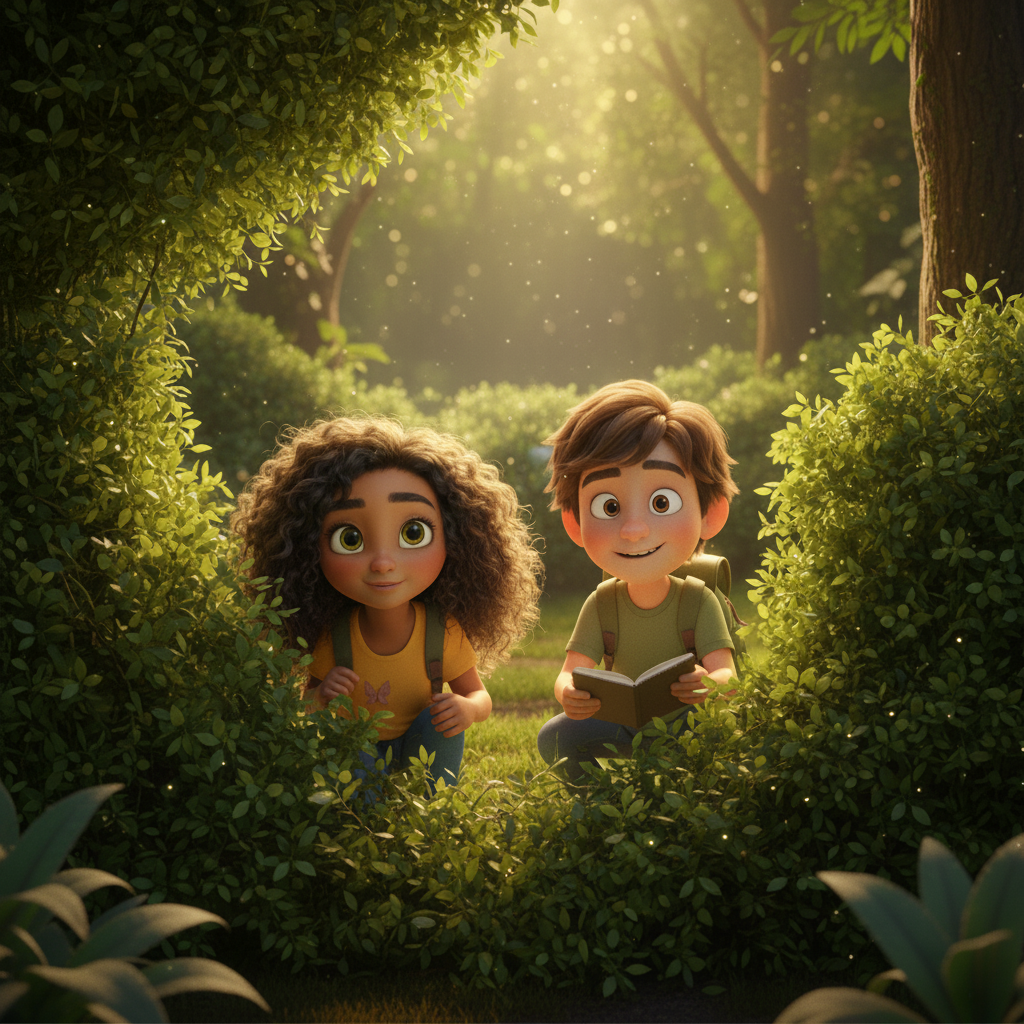
On Saturday morning, they arrived very early and hid behind a bush. They waited a long time.
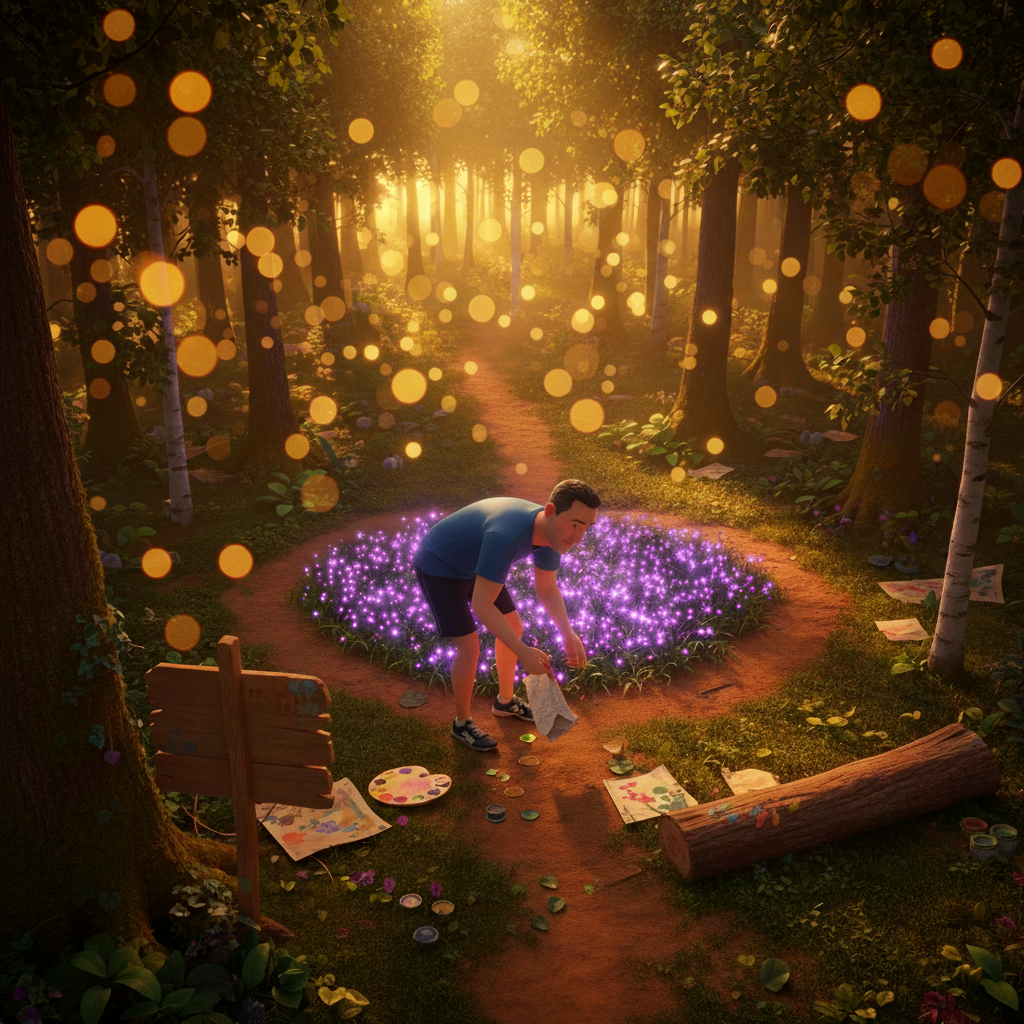
Joggers pass by. They leave nothing behind. A man even picks up a piece of paper from the ground. Naya and Tom are happy.
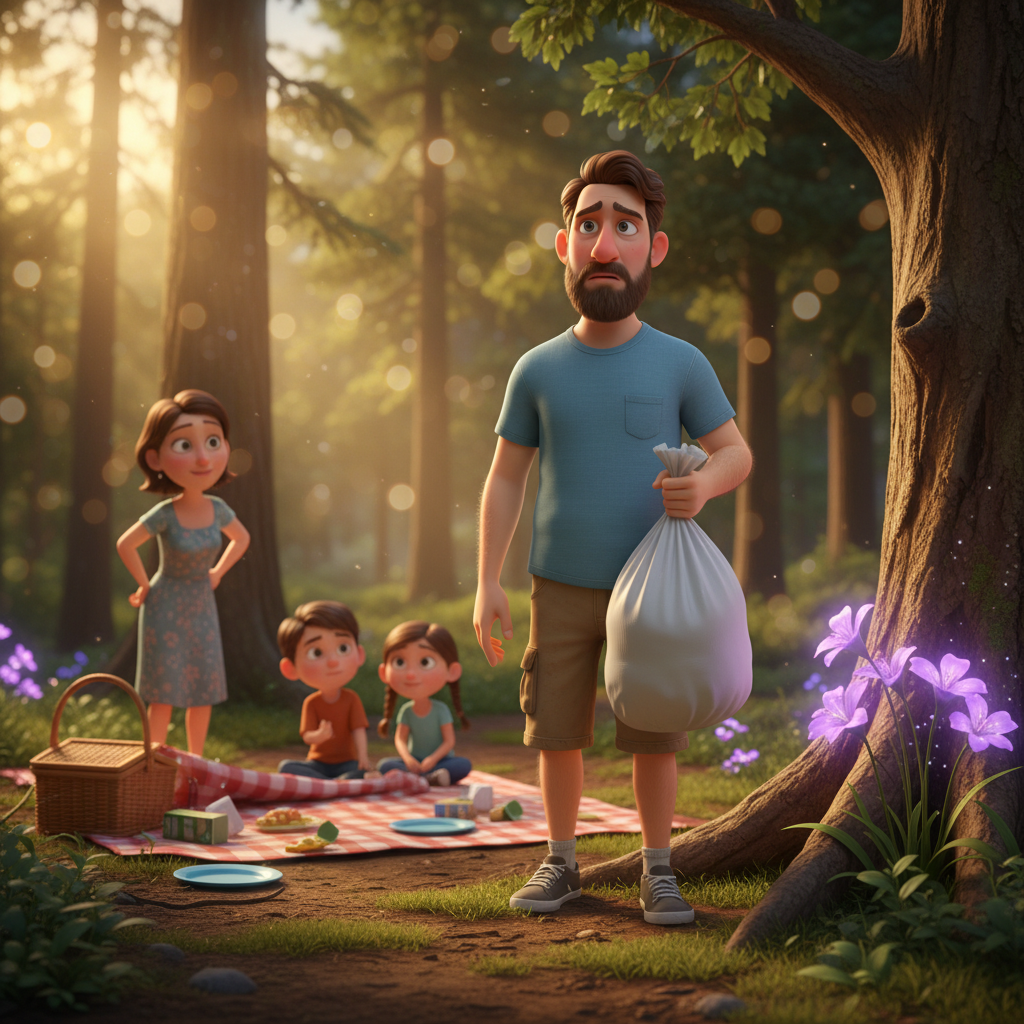
Then a family arrives for a picnic. At the end, the father looks for a trash can. He can't find one. So he leaves the bag of rubbish at the foot of a tree.
"There's no trash can," he told his wife.
Naya understands something important. Many people aren't bad. They're just looking for a trash can!
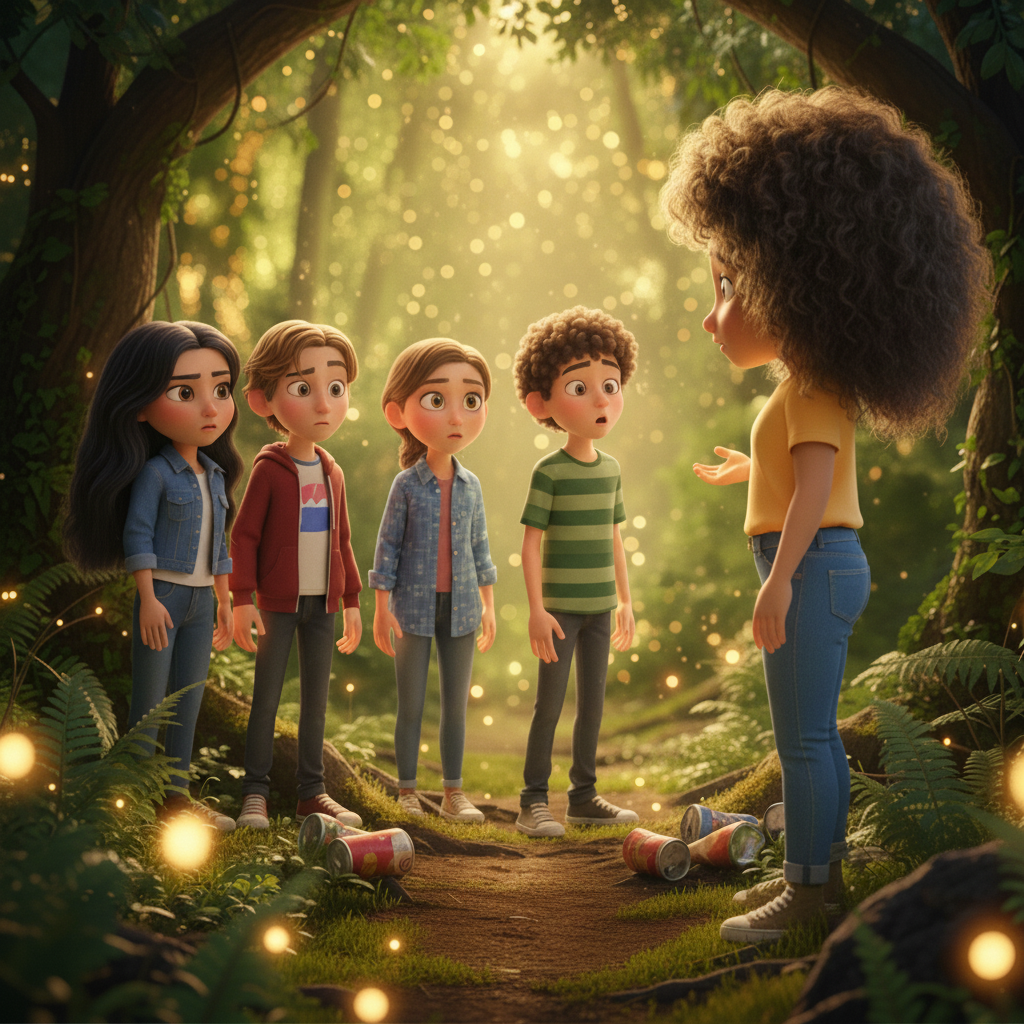
Teenagers arrive too. A girl reads the sign. She wants to do the right thing, but doesn't know where to throw her rubbish.
Naya comes out of her hiding place and speaks to them kindly. The teenagers agree to take their rubbish with them.
That evening, Tom and Naya reflected. Of the 23 people observed, 8 left litter. And 6 were looking for a bin!
"We need to ask the town hall to install some bins!" said Tom.
Naya smiled. They found the solution!
On Saturday morning, they arrived very early and hid behind a bush. They waited a long time.
Joggers pass by. They leave nothing behind. A man even picks up a piece of paper from the ground. Naya and Tom are happy.
Then a family arrives for a picnic. At the end, the father looks for a trash can. He can't find one. So he leaves the bag of rubbish at the foot of a tree.
"There's no trash can," he told his wife.
Naya understands something important. Many people aren't bad. They're just looking for a trash can!
Teenagers arrive too. A girl reads the sign. She wants to do the right thing, but doesn't know where to throw her rubbish.
Naya comes out of her hiding place and speaks to them kindly. The teenagers agree to take their rubbish with them.
That evening, Tom and Naya reflected. Of the 23 people observed, 8 left litter. And 6 were looking for a bin!
"We need to ask the town hall to install some bins!" said Tom.
Naya smiled. They found the solution!
The next day, Naya and Tom return to the clearing with a new mission: to discover who is polluting and why.
"We can't just clean all the time," said Tom. "We have to understand the problem."
"You're right. But how?"
"What if we came to observe at different times? Like detectives!"
"Great idea! Shall we come on Saturday?"
On Saturday morning, Naya wakes up very early. Tom is already waiting for her at the end of the street. They walk to the forest in the morning silence.
Near the clearing, they hide behind a large bush. From there, they can see everything without being seen.
The minutes pass slowly. Naya is a little cold. Tom nibbles on a biscuit.
Two joggers arrive. They admire the flower and leave without leaving anything behind.
"They are respectful," Naya murmurs.
Later, a man even picks up a piece of paper that was lying around.
But around noon, a family arrives with a picnic. They eat, the children play, everything is fine.
As she was leaving, the mother collected the empty packaging in a bag.
"Isn't there a bin here?" asks the father.
"I don't see any," the mother replied.
The father hesitates, then puts the bag down at the foot of a tree.
"Someone must surely come and pick it up."
And they leave.
Naya wants to go outside and yell at them. But Tom holds her back.
"Did you hear that? They were looking for a trash can!"
Naya thought for a moment. That's true. They didn't throw their trash away out of malice.
In the afternoon, other people pass by. Many leave litter, saying, "There are no bins."
Teenagers arrive too. They throw their cans on the ground. A girl points to the sign.
"We shouldn't leave our trash," she said.
"There's no bin. Where do you want us to put them?" a boy replies.
This time, Naya comes out of hiding.
"You are destroying the forest!" she said.
"We just leave some trash," the boy replied.
"But there really isn't a bin," the girl said, embarrassed.
Naya calms down. She remembers: you have to understand before you judge.
"Do you live far away?"
"No, in the neighborhood."
"So you could take your rubbish home with you?"
The girl thinks for a moment and nods. She starts to pick things up. The others help her.
"Thank you," said Naya. "Really, thank you."
"But frankly, we need trash cans here," said a boy.
In the evening, Tom and Naya have a debriefing at Tom's house.
"We observed 23 people," said Tom, counting in his notebook. "Eight left litter. And six of those eight were looking for a bin."
"So the real problem is that there are no trash cans!" exclaims Naya.
"Exactly! We need to ask the town hall to install them!"
"We can write them a letter! Show them our observations!"
"And we could talk about it at school too!" adds Tom. "The more of us there are, the stronger our voice will be!"
That evening, Naya returned home full of hope. They understood the problem. Now they could find a real solution.
We shouldn't judge too quickly. We need to understand. And together, we can change everything.
"We can't just clean all the time," said Tom. "We have to understand the problem."
"You're right. But how?"
"What if we came to observe at different times? Like detectives!"
"Great idea! Shall we come on Saturday?"
On Saturday morning, Naya wakes up very early. Tom is already waiting for her at the end of the street. They walk to the forest in the morning silence.
Near the clearing, they hide behind a large bush. From there, they can see everything without being seen.
The minutes pass slowly. Naya is a little cold. Tom nibbles on a biscuit.
Two joggers arrive. They admire the flower and leave without leaving anything behind.
"They are respectful," Naya murmurs.
Later, a man even picks up a piece of paper that was lying around.
But around noon, a family arrives with a picnic. They eat, the children play, everything is fine.
As she was leaving, the mother collected the empty packaging in a bag.
"Isn't there a bin here?" asks the father.
"I don't see any," the mother replied.
The father hesitates, then puts the bag down at the foot of a tree.
"Someone must surely come and pick it up."
And they leave.
Naya wants to go outside and yell at them. But Tom holds her back.
"Did you hear that? They were looking for a trash can!"
Naya thought for a moment. That's true. They didn't throw their trash away out of malice.
In the afternoon, other people pass by. Many leave litter, saying, "There are no bins."
Teenagers arrive too. They throw their cans on the ground. A girl points to the sign.
"We shouldn't leave our trash," she said.
"There's no bin. Where do you want us to put them?" a boy replies.
This time, Naya comes out of hiding.
"You are destroying the forest!" she said.
"We just leave some trash," the boy replied.
"But there really isn't a bin," the girl said, embarrassed.
Naya calms down. She remembers: you have to understand before you judge.
"Do you live far away?"
"No, in the neighborhood."
"So you could take your rubbish home with you?"
The girl thinks for a moment and nods. She starts to pick things up. The others help her.
"Thank you," said Naya. "Really, thank you."
"But frankly, we need trash cans here," said a boy.
In the evening, Tom and Naya have a debriefing at Tom's house.
"We observed 23 people," said Tom, counting in his notebook. "Eight left litter. And six of those eight were looking for a bin."
"So the real problem is that there are no trash cans!" exclaims Naya.
"Exactly! We need to ask the town hall to install them!"
"We can write them a letter! Show them our observations!"
"And we could talk about it at school too!" adds Tom. "The more of us there are, the stronger our voice will be!"
That evening, Naya returned home full of hope. They understood the problem. Now they could find a real solution.
We shouldn't judge too quickly. We need to understand. And together, we can change everything.
The next day after school, Naya and Tom returned to the clearing with their bags and gloves. They had decided to clean it up again, but this time, they also wanted to understand. Who was polluting the clearing? Why? And how could they stop it?
"We can't just keep cleaning up over and over again," said Tom, picking up an empty can. "We have to find out who's doing this and why."
"You're right," Naya agreed. "But how do we do it?"
Tom thought for a moment, then his eyes lit up.
"What if we came back at different times of the day? That way, we could observe the people who come here. Maybe we'll discover who's leaving all this trash."
"That's a good idea! We could come very early Saturday morning, and also in the afternoon. And maybe Sunday too?"
"Deal done! We'll be like detectives!"
They finish cleaning the clearing, carefully picking up every piece of litter. The small purple flowers already seem a little better, now that they can breathe. Even the small, damaged flower is perking up slightly.
"Courage," Naya murmured, gently stroking her. "We'll find a solution."
On Saturday morning, Naya wakes up very early. The sun is barely rising. She gets dressed silently so as not to wake her little sister, takes a croissant from the kitchen, and leaves the house on tiptoe.
Tom is already waiting for him at the end of the street.
"Are you ready for our espionage mission?" he asks with an excited smile.
"Ready!"
They walk to the forest. Everything is silent. The birds are just beginning to sing. Dew sparkles on the leaves and grass. It's a magical, almost unreal moment.
When they arrive near the clearing, they don't go directly to the center. Instead, they hide behind a large bush that offers them a good view of the whole area, but where no one can see them.
"Now we wait," Tom whispers.
The minutes pass slowly. Naya is starting to feel a little cold. Tom nibbles on a biscuit he brought in his pocket. They watch in silence.
After half an hour, they hear voices. Two joggers arrive in the clearing. They do some stretches, admire the large purple flower, read the sign... then leave without leaving any litter.
"They're respectful," Naya murmured. "They're not the problem."
An hour later, a man walks by. He even picks up a piece of paper that was lying around and puts it in his pocket. Naya and Tom exchange a surprised and encouraged look.
"There are some good people out there!" Tom sighed with relief.
But around noon, a family arrives: Dess and their children. They carry a large picnic bag and a blanket. They settle down in the clearing, admire the flowers, and begin to eat.
Naya and Tom are watching them closely.
The children are noisy and happy. They run around the clearing playing. The parents chat quietly while eating their sandwiches. Everything seems normal.
But when the time comes to leave, Naya holds her breath.
The mother starts collecting the empty packaging and puts it in a plastic bag. The father folds the blanket. They gather their things.
"Look," Tom whispered hopefully. "They're going to take everything!"
But then, the father looks around him, looking bored.
"There's no trash can here?" he said to his wife./>
"I don't see any," she replied. "What do we do?"
The father hesitated for a moment, holding the bag of rubbish in his hand. Then, with a sigh, he placed it at the foot of a tree.
"We'll leave it there. Someone must surely come to collect it regularly."
"Are you sure?" asks the mother, not very convinced.
"We're not going to be lugging around the rubbish all day. Come on, kids, let's go!"
And the family leaves, leaving their bag of rubbish behind them.
Naya felt anger rising within her. She wanted to come out of their hiding place and shout at them. But Tom placed a hand on her arm.
"Wait," he murmured. "Did you hear what they said?"
"Yes! They said they didn't want to carry their rubbish around! That's ridiculous!"
"But they also said they were looking for a bin. They didn't just throw their rubbish on the ground like bad people. They were looking for a bin, and since they couldn't find one..."
Naya thought about what Tom had just said. It was true. The family didn't seem mean. They'd even read the sign. But there were no trash cans in the forest.
"Do you think that's the problem?" she asks slowly. "The lack of trash cans?"
"I believe that's partly true. Let's continue to observe."
In the afternoon, several other groups pass by. Some take their rubbish with them. Others leave it, always with the same excuse: "There are no rubbish bins."
A group of teenagers arrives around 3 p.m. They sit down in the clearing and take out cans of soda and chips. Naya and Tom watch them closely.
The teenagers are eating and laughing loudly. One of them throws his empty can on the ground without even thinking. Another does the same with his bag of chips.
"Hey, guys," said a girl in the group, pointing to the sign. "Look, there's a sign that says not to litter."
"Meh," one of the boys replied, shrugging his shoulders. "Anyway, there's no bin. Where do you expect us to put them?"
"We could take them with us," the girl timidly suggested.
"To walk around with our smelly garbage? Absolutely not!"
And they continue to throw their packaging on the ground.
This time, Naya can't hold back any longer. She comes out from behind the bush, Tom right behind her.
"Excuse me!" she exclaimed in a loud voice.
The teenagers jump and turn towards her.
"What are you doing? Is this your forest?" one of them asks mockingly.
"No, but this is everyone's forest!" Naya replied, her hands on her hips. "And you're destroying it!"
"We're not destroying anything at all," the boy replied. "We're just leaving some trash. It's not a big deal."
"Yes, it's serious!" exclaimed Tom, stepping forward. "This waste prevents plants from growing! And it pollutes the soil and the water!"
One of the girls in the group, the one who had noticed the sign, looks embarrassed.
"Sorry," she said softly. "But really, there's no trash can here. We don't know what to do with our rubbish."
Naya takes a deep breath to calm herself. She remembers what her mother told her: you have to understand before you judge.
"Do you live far from here?" she asks in a softer voice.
“No, we live in the neighborhood,” the girl replied. “We just came"Often here."
"So you could take your rubbish home with you, couldn't you? It's not very far."
The girl thought for a moment, then nodded.
"You're right. We could do that."
She starts picking up the cans and packaging that her group has thrown away. After a moment of hesitation, the others help her, somewhat reluctantly.
"Thank you," said Naya with a genuine smile. "Really, thank you."
"It's fine," muttered one of the boys. "But honestly, we need bins here. It would be easier for everyone."
When the teenagers left, Naya and Tom went back behind their bush. The sun began to set in the sky.
"Did you hear what they said?" Tom asked. "Even the people who pollute think we need trash cans."
“Yes. I think we’ve found part of the problem. Some people are just lazy or mean, that’s true. But others really don’t know what to do with their trash because there aren’t any bins.”
On Sunday, they come back to observe again. And it's the same thing: some take their rubbish with them, others leave it, saying there are no rubbish bins.
On Sunday evening, Naya and Tom meet at Tom's house to review their investigation. Tom takes out his notebook and begins to write down all their observations.
"So," he wrote, "we observed 23 people or groups of people over two days."
"And how many left behind litter?" Naya asks.
"Eight. That's about a third."
"And how many said they were looking for a trash can?"
Tom is counting in his head.
"Six out of eight. The other two just threw their trash around without thinking."
Naya thought intensely.
"So the problem isn't just that people are disrespectful. It's also that there's nowhere to throw away trash."
"Exactly!" exclaimed Tom. "If we really want to protect the clearing, it's not enough to just clean it up and put up signs. We also need bins!"
"But we can't install trash cans ourselves," Naya sighed. "We're just children."
Tom bit his lip, thinking intensely.
“My mother works for an environmental association,” he said slowly. “She might be able to help us. And there’s also the town hall. They’re the ones who take care of public spaces, aren’t they?”
Naya's eyes light up.
"You're right! We could write them a letter! Explain the problem and ask them to install trash cans in the forest!"
"Yes! And we could show them our observations, our notebook, the photos! That way, they'll see we're serious!"
"We could also tell them about the purple flower," Naya adds enthusiastically. "Explain to them that there are rare plants here that need protecting!"
Tom jumped up, very excited.
"We'll do it! We'll write the letter tomorrow!"
"And you know what? We could also talk about it at school. Maybe other students would want to help us! The more of us there are, the stronger our voice will be!"
"Awesome! My sister always says that together, we can move mountains!"
That evening, on her way home, Naya felt different. She was no longer discouraged. On the contrary, she was full of hope and energy.
Their investigation paid off. They understood that the problemIt was more complicated than they thought. It's not just a matter of bad people who respect nothing. It's also a problem of lacking infrastructure.
And now that they understand the problem, they can find a real solution.
Before falling asleep, Naya thinks back on all the people they observed that weekend. The family looking for a trash can. The girl from the group of teenagers who had agreed to pick up litter. The man who had put a piece of paper in his pocket to throw away later.
There is hope. Not all people are bad. Many want to do good, but they need help. They need trash cans, signs, education.
And Naya and Tom are going to give them all of that.
The mission continues. And now it becomes even bigger.
"We can't just keep cleaning up over and over again," said Tom, picking up an empty can. "We have to find out who's doing this and why."
"You're right," Naya agreed. "But how do we do it?"
Tom thought for a moment, then his eyes lit up.
"What if we came back at different times of the day? That way, we could observe the people who come here. Maybe we'll discover who's leaving all this trash."
"That's a good idea! We could come very early Saturday morning, and also in the afternoon. And maybe Sunday too?"
"Deal done! We'll be like detectives!"
They finish cleaning the clearing, carefully picking up every piece of litter. The small purple flowers already seem a little better, now that they can breathe. Even the small, damaged flower is perking up slightly.
"Courage," Naya murmured, gently stroking her. "We'll find a solution."
On Saturday morning, Naya wakes up very early. The sun is barely rising. She gets dressed silently so as not to wake her little sister, takes a croissant from the kitchen, and leaves the house on tiptoe.
Tom is already waiting for him at the end of the street.
"Are you ready for our espionage mission?" he asks with an excited smile.
"Ready!"
They walk to the forest. Everything is silent. The birds are just beginning to sing. Dew sparkles on the leaves and grass. It's a magical, almost unreal moment.
When they arrive near the clearing, they don't go directly to the center. Instead, they hide behind a large bush that offers them a good view of the whole area, but where no one can see them.
"Now we wait," Tom whispers.
The minutes pass slowly. Naya is starting to feel a little cold. Tom nibbles on a biscuit he brought in his pocket. They watch in silence.
After half an hour, they hear voices. Two joggers arrive in the clearing. They do some stretches, admire the large purple flower, read the sign... then leave without leaving any litter.
"They're respectful," Naya murmured. "They're not the problem."
An hour later, a man walks by. He even picks up a piece of paper that was lying around and puts it in his pocket. Naya and Tom exchange a surprised and encouraged look.
"There are some good people out there!" Tom sighed with relief.
But around noon, a family arrives: Dess and their children. They carry a large picnic bag and a blanket. They settle down in the clearing, admire the flowers, and begin to eat.
Naya and Tom are watching them closely.
The children are noisy and happy. They run around the clearing playing. The parents chat quietly while eating their sandwiches. Everything seems normal.
But when the time comes to leave, Naya holds her breath.
The mother starts collecting the empty packaging and puts it in a plastic bag. The father folds the blanket. They gather their things.
"Look," Tom whispered hopefully. "They're going to take everything!"
But then, the father looks around him, looking bored.
"There's no trash can here?" he said to his wife./>
"I don't see any," she replied. "What do we do?"
The father hesitated for a moment, holding the bag of rubbish in his hand. Then, with a sigh, he placed it at the foot of a tree.
"We'll leave it there. Someone must surely come to collect it regularly."
"Are you sure?" asks the mother, not very convinced.
"We're not going to be lugging around the rubbish all day. Come on, kids, let's go!"
And the family leaves, leaving their bag of rubbish behind them.
Naya felt anger rising within her. She wanted to come out of their hiding place and shout at them. But Tom placed a hand on her arm.
"Wait," he murmured. "Did you hear what they said?"
"Yes! They said they didn't want to carry their rubbish around! That's ridiculous!"
"But they also said they were looking for a bin. They didn't just throw their rubbish on the ground like bad people. They were looking for a bin, and since they couldn't find one..."
Naya thought about what Tom had just said. It was true. The family didn't seem mean. They'd even read the sign. But there were no trash cans in the forest.
"Do you think that's the problem?" she asks slowly. "The lack of trash cans?"
"I believe that's partly true. Let's continue to observe."
In the afternoon, several other groups pass by. Some take their rubbish with them. Others leave it, always with the same excuse: "There are no rubbish bins."
A group of teenagers arrives around 3 p.m. They sit down in the clearing and take out cans of soda and chips. Naya and Tom watch them closely.
The teenagers are eating and laughing loudly. One of them throws his empty can on the ground without even thinking. Another does the same with his bag of chips.
"Hey, guys," said a girl in the group, pointing to the sign. "Look, there's a sign that says not to litter."
"Meh," one of the boys replied, shrugging his shoulders. "Anyway, there's no bin. Where do you expect us to put them?"
"We could take them with us," the girl timidly suggested.
"To walk around with our smelly garbage? Absolutely not!"
And they continue to throw their packaging on the ground.
This time, Naya can't hold back any longer. She comes out from behind the bush, Tom right behind her.
"Excuse me!" she exclaimed in a loud voice.
The teenagers jump and turn towards her.
"What are you doing? Is this your forest?" one of them asks mockingly.
"No, but this is everyone's forest!" Naya replied, her hands on her hips. "And you're destroying it!"
"We're not destroying anything at all," the boy replied. "We're just leaving some trash. It's not a big deal."
"Yes, it's serious!" exclaimed Tom, stepping forward. "This waste prevents plants from growing! And it pollutes the soil and the water!"
One of the girls in the group, the one who had noticed the sign, looks embarrassed.
"Sorry," she said softly. "But really, there's no trash can here. We don't know what to do with our rubbish."
Naya takes a deep breath to calm herself. She remembers what her mother told her: you have to understand before you judge.
"Do you live far from here?" she asks in a softer voice.
“No, we live in the neighborhood,” the girl replied. “We just came"Often here."
"So you could take your rubbish home with you, couldn't you? It's not very far."
The girl thought for a moment, then nodded.
"You're right. We could do that."
She starts picking up the cans and packaging that her group has thrown away. After a moment of hesitation, the others help her, somewhat reluctantly.
"Thank you," said Naya with a genuine smile. "Really, thank you."
"It's fine," muttered one of the boys. "But honestly, we need bins here. It would be easier for everyone."
When the teenagers left, Naya and Tom went back behind their bush. The sun began to set in the sky.
"Did you hear what they said?" Tom asked. "Even the people who pollute think we need trash cans."
“Yes. I think we’ve found part of the problem. Some people are just lazy or mean, that’s true. But others really don’t know what to do with their trash because there aren’t any bins.”
On Sunday, they come back to observe again. And it's the same thing: some take their rubbish with them, others leave it, saying there are no rubbish bins.
On Sunday evening, Naya and Tom meet at Tom's house to review their investigation. Tom takes out his notebook and begins to write down all their observations.
"So," he wrote, "we observed 23 people or groups of people over two days."
"And how many left behind litter?" Naya asks.
"Eight. That's about a third."
"And how many said they were looking for a trash can?"
Tom is counting in his head.
"Six out of eight. The other two just threw their trash around without thinking."
Naya thought intensely.
"So the problem isn't just that people are disrespectful. It's also that there's nowhere to throw away trash."
"Exactly!" exclaimed Tom. "If we really want to protect the clearing, it's not enough to just clean it up and put up signs. We also need bins!"
"But we can't install trash cans ourselves," Naya sighed. "We're just children."
Tom bit his lip, thinking intensely.
“My mother works for an environmental association,” he said slowly. “She might be able to help us. And there’s also the town hall. They’re the ones who take care of public spaces, aren’t they?”
Naya's eyes light up.
"You're right! We could write them a letter! Explain the problem and ask them to install trash cans in the forest!"
"Yes! And we could show them our observations, our notebook, the photos! That way, they'll see we're serious!"
"We could also tell them about the purple flower," Naya adds enthusiastically. "Explain to them that there are rare plants here that need protecting!"
Tom jumped up, very excited.
"We'll do it! We'll write the letter tomorrow!"
"And you know what? We could also talk about it at school. Maybe other students would want to help us! The more of us there are, the stronger our voice will be!"
"Awesome! My sister always says that together, we can move mountains!"
That evening, on her way home, Naya felt different. She was no longer discouraged. On the contrary, she was full of hope and energy.
Their investigation paid off. They understood that the problemIt was more complicated than they thought. It's not just a matter of bad people who respect nothing. It's also a problem of lacking infrastructure.
And now that they understand the problem, they can find a real solution.
Before falling asleep, Naya thinks back on all the people they observed that weekend. The family looking for a trash can. The girl from the group of teenagers who had agreed to pick up litter. The man who had put a piece of paper in his pocket to throw away later.
There is hope. Not all people are bad. Many want to do good, but they need help. They need trash cans, signs, education.
And Naya and Tom are going to give them all of that.
The mission continues. And now it becomes even bigger.