Camille
Chapter 10: The Legacy of Magic
Camille discovers the truth about her paintings and the role she must play. One adventure ends, but her inner journey is only just beginning.
Reading difficulty
Back home, Camille reflects on her adventure.
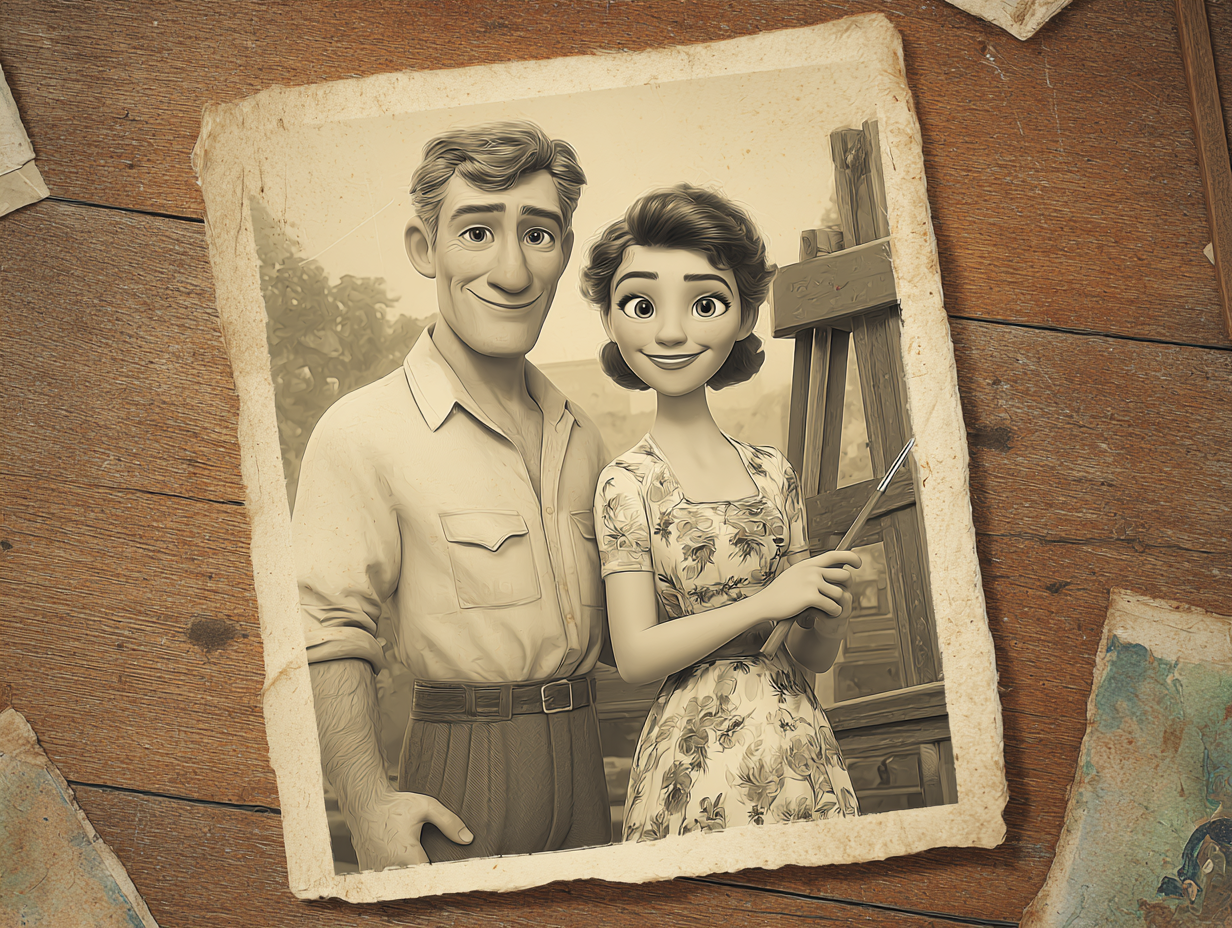
She finds an old photograph in Augustin's notebook. A young man is posing in front of a painting. Next to him, a woman is holding a paintbrush. She looks like Madame Rousseau!
Camille runs to the old lady's house. "Is that you in this photo?"
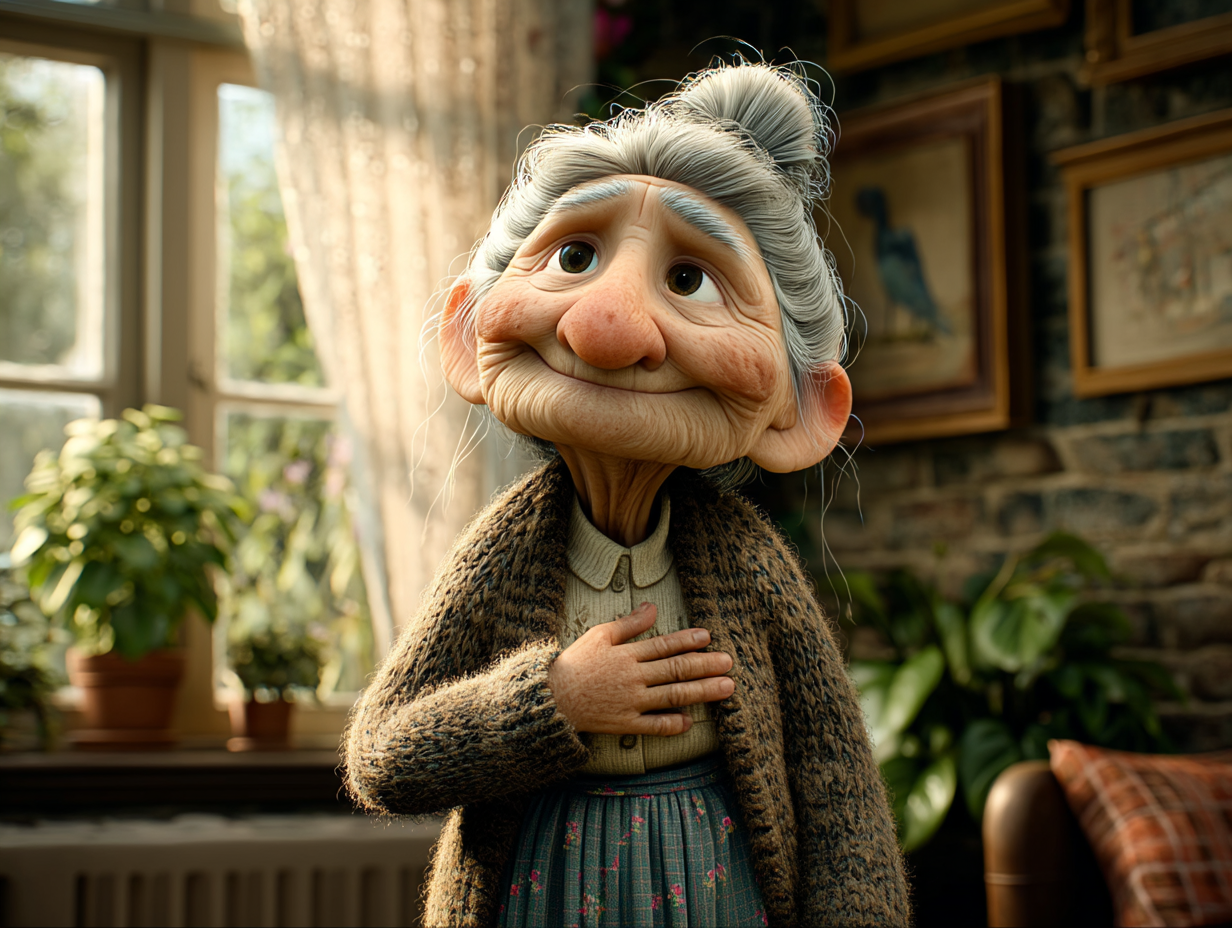
Madame Rousseau smiled. "Yes, that's me. The young man is Augustin. We created the magic paintings together."
"Why didn't you tell me anything?" Camille asks.
"You had to discover the magic on your own. When I saw you with the box, I knew you were the one Augustin had hoped for."
"What should I do now?"
"Keep painting and sharing. Use these colors to do good."
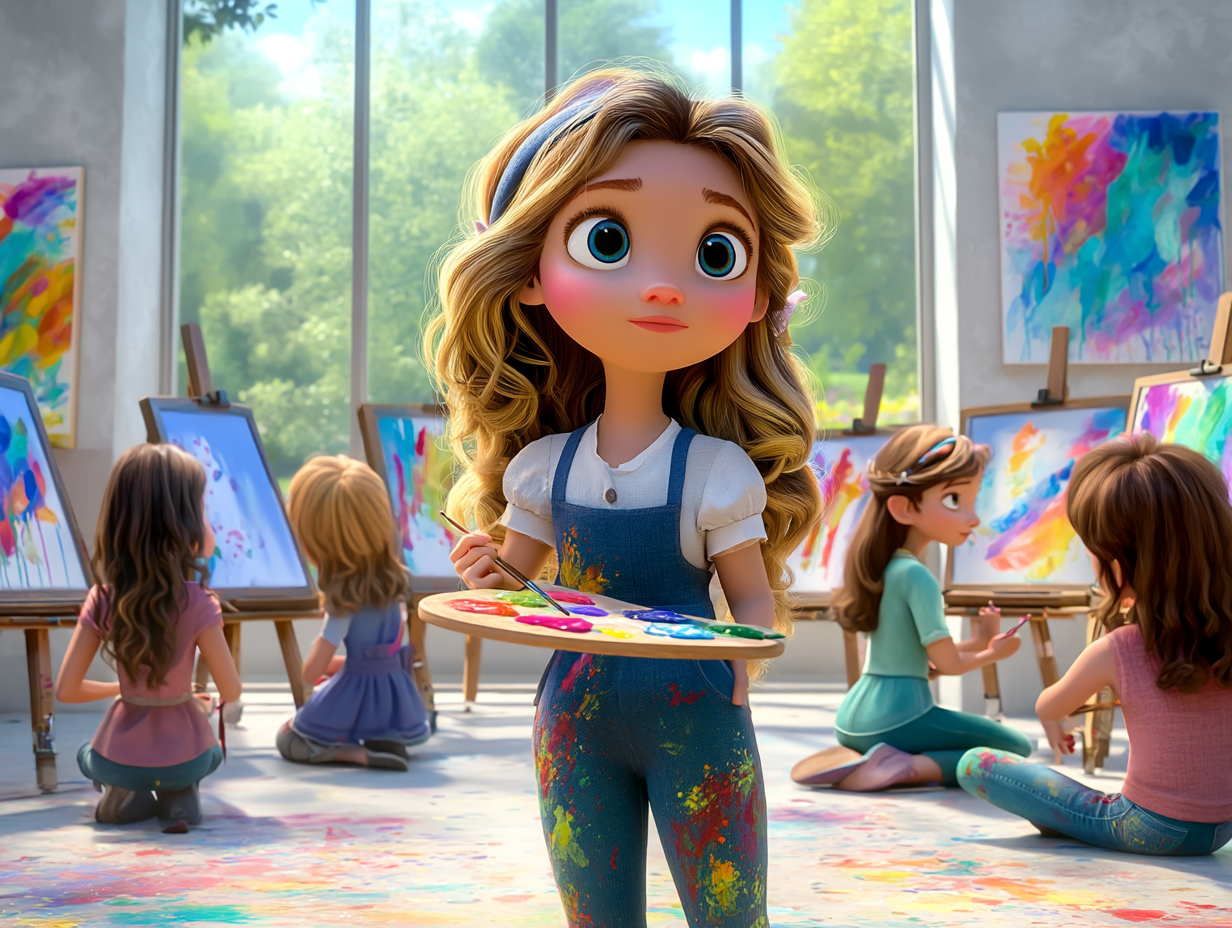
Camille organizes workshops for children in her neighborhood. She shows them how to use colors to express their emotions.
Years pass. Camille understands that it is time to pass on the paintings. She writes a letter and hides the box in a secret place.
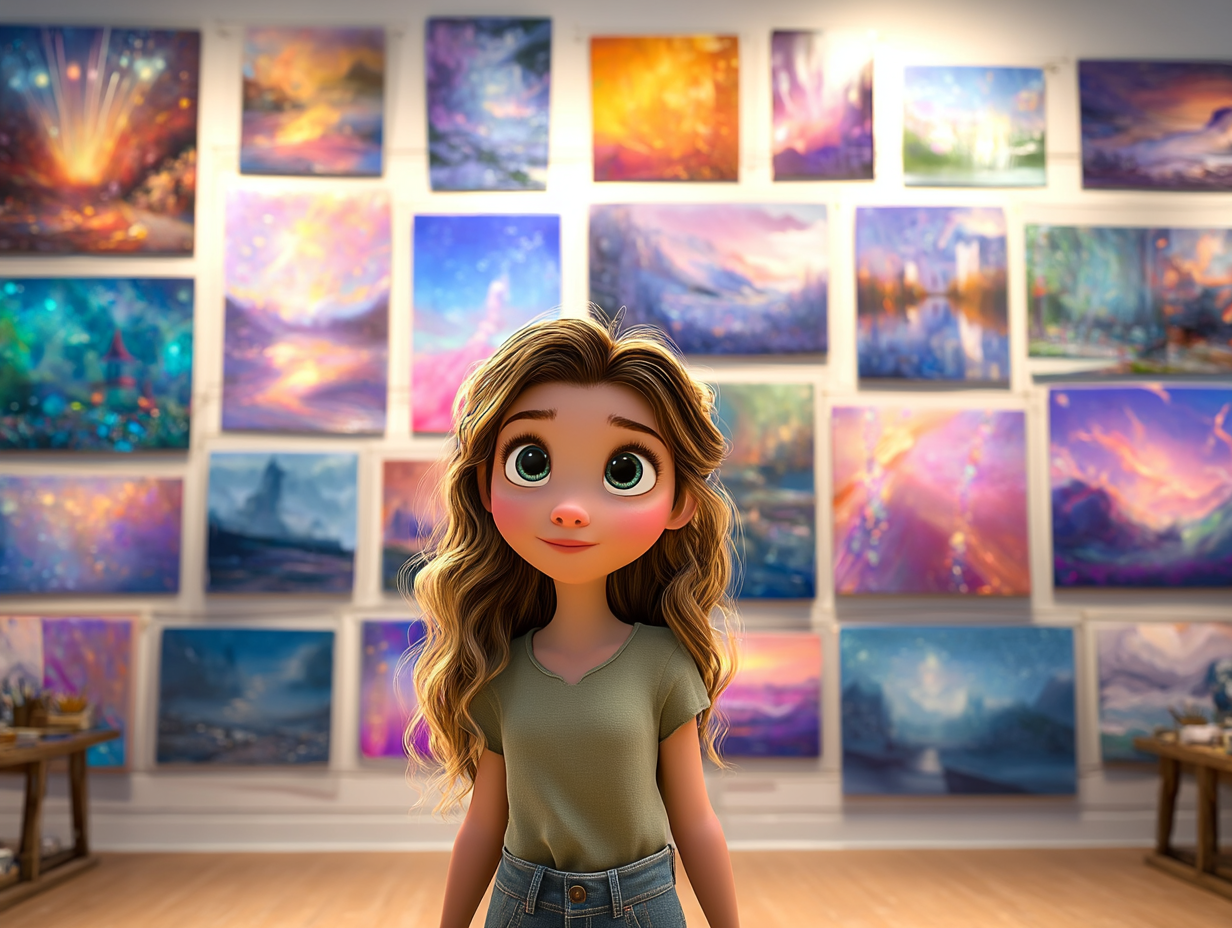
She smiled as she looked at her canvases. Her role was over, but the story of the magic paintings continued.
She finds an old photograph in Augustin's notebook. A young man is posing in front of a painting. Next to him, a woman is holding a paintbrush. She looks like Madame Rousseau!
Camille runs to the old lady's house. "Is that you in this photo?"
Madame Rousseau smiled. "Yes, that's me. The young man is Augustin. We created the magic paintings together."
"Why didn't you tell me anything?" Camille asks.
"You had to discover the magic on your own. When I saw you with the box, I knew you were the one Augustin had hoped for."
"What should I do now?"
"Keep painting and sharing. Use these colors to do good."
Camille organizes workshops for children in her neighborhood. She shows them how to use colors to express their emotions.
Years pass. Camille understands that it is time to pass on the paintings. She writes a letter and hides the box in a secret place.
She smiled as she looked at her canvases. Her role was over, but the story of the magic paintings continued.
Back home after her adventure in the final workshop, Camille spends hours reflecting. The magic paints aren't just a simple tool to beautify the world. They create a connection between hearts. But one question remains: why her? Why did these paints end up in her hands?
One morning, while she was putting away her equipment, she found an old photo slipped into the pages of Augustin Lemerle's notebook.
In the photograph, a young man poses in front of a painting. His smile radiates, and the vibrant colors behind him remind Camille of everything she has just experienced. But one detail catches her eye: next to the man, a woman holds a paintbrush. She bears a striking resemblance to Madame Rousseau.
Intrigued, Camille rushed to the old lady's house. "Madame Rousseau, look! That's you in this photo, isn't it?"
Madame Rousseau looks at the photo, a slight smile on her lips. "Yes, that's me. And that young man was Augustin. We worked together a long time ago, in this workshop. The magical paintings are the result of our joint research."
Camille is stunned. "But why didn't you tell me anything? Why did you let me discover all this on my own?"
Madame Rousseau placed a gentle hand on Camille's shoulder. "Because magic isn't something you're given on a silver platter. It's something you discover, something you learn to respect. You had to find your own way."
She continued: "When Augustin realized that the magic of the paintings could be dangerous in the wrong hands, he decided to hide them. But he knew that, sooner or later, someone worthy of this legacy would find them. When I first saw you with this box, I knew you were the one he had hoped for."
Camille feels a mixture of emotions: pride, gratitude, but also a slight dizziness at the responsibility that now rests on her shoulders. "But what do I have to do now?" she asks.
Madame Rousseau smiled. "Keep painting, Camille. Keep sharing. And above all, use these colors to do good around you. It's not a burden, but an opportunity."
Days pass, and Camille returns to her daily life with a new perspective on her paintings. She begins organizing workshops for the children in her neighborhood. She shows them how to use colors to express their emotions and beautify the world.
Little by little, she sees the magic spreading, not only through the paintings, but through the connections they create between people.
One evening, while leafing through her notebook, Camille came across a final, almost erased entry at the bottom of Augustin's notebook. She read it aloud:
"The legacy of magic lies not in the colors, but in the hearts they touch."
Years pass, and Camille grows up. What began as a mystery becomes, with time, a responsibility she bears with wisdom. She uses her paintings to beautify the lives of others.
One day, Camille realizes it's time to turn the page. Like Augustin before her, she feels the need to pass on this legacy.
In her light-filled studio, she prepares the paintings for their final journey. Carefully, she closes the wooden box, adding a handwritten letter:
"If you find these paintings, know that they are a responsibility, a means of uniting and transforming. Use them wisely, and above all, with an open heart."
Camille hides the box in a place that sheShe knew for sure it would be a quiet place where nature would take care to preserve this treasure. A feeling of peace washed over her. She knew that the magic would one day find someone who would respect it.
Returning home, Camille looks one last time at her canvases and the world she has helped to beautify. She smiles, knowing that her role is over, but that the story of the magic paintings is only just beginning.
One morning, while she was putting away her equipment, she found an old photo slipped into the pages of Augustin Lemerle's notebook.
In the photograph, a young man poses in front of a painting. His smile radiates, and the vibrant colors behind him remind Camille of everything she has just experienced. But one detail catches her eye: next to the man, a woman holds a paintbrush. She bears a striking resemblance to Madame Rousseau.
Intrigued, Camille rushed to the old lady's house. "Madame Rousseau, look! That's you in this photo, isn't it?"
Madame Rousseau looks at the photo, a slight smile on her lips. "Yes, that's me. And that young man was Augustin. We worked together a long time ago, in this workshop. The magical paintings are the result of our joint research."
Camille is stunned. "But why didn't you tell me anything? Why did you let me discover all this on my own?"
Madame Rousseau placed a gentle hand on Camille's shoulder. "Because magic isn't something you're given on a silver platter. It's something you discover, something you learn to respect. You had to find your own way."
She continued: "When Augustin realized that the magic of the paintings could be dangerous in the wrong hands, he decided to hide them. But he knew that, sooner or later, someone worthy of this legacy would find them. When I first saw you with this box, I knew you were the one he had hoped for."
Camille feels a mixture of emotions: pride, gratitude, but also a slight dizziness at the responsibility that now rests on her shoulders. "But what do I have to do now?" she asks.
Madame Rousseau smiled. "Keep painting, Camille. Keep sharing. And above all, use these colors to do good around you. It's not a burden, but an opportunity."
Days pass, and Camille returns to her daily life with a new perspective on her paintings. She begins organizing workshops for the children in her neighborhood. She shows them how to use colors to express their emotions and beautify the world.
Little by little, she sees the magic spreading, not only through the paintings, but through the connections they create between people.
One evening, while leafing through her notebook, Camille came across a final, almost erased entry at the bottom of Augustin's notebook. She read it aloud:
"The legacy of magic lies not in the colors, but in the hearts they touch."
Years pass, and Camille grows up. What began as a mystery becomes, with time, a responsibility she bears with wisdom. She uses her paintings to beautify the lives of others.
One day, Camille realizes it's time to turn the page. Like Augustin before her, she feels the need to pass on this legacy.
In her light-filled studio, she prepares the paintings for their final journey. Carefully, she closes the wooden box, adding a handwritten letter:
"If you find these paintings, know that they are a responsibility, a means of uniting and transforming. Use them wisely, and above all, with an open heart."
Camille hides the box in a place that sheShe knew for sure it would be a quiet place where nature would take care to preserve this treasure. A feeling of peace washed over her. She knew that the magic would one day find someone who would respect it.
Returning home, Camille looks one last time at her canvases and the world she has helped to beautify. She smiles, knowing that her role is over, but that the story of the magic paintings is only just beginning.
Back home after their adventure in the final workshop, Camille spends hours reflecting on everything she's learned. The magic paints aren't just a simple tool to beautify the world. They're a connection between hearts, a way to transform and strengthen what already exists. But one question lingers in her mind: why her? Why did these mysterious paints fall into her hands?
One morning, while she was putting away her notebook and tubes in her room, she found an old photo slipped into the pages of Augustin Lemerle's notebook.
In the time-yellowed photograph, a young man poses proudly in front of a colorful painting. His smile radiates, and the vibrant colors behind him remind Camille of everything she has just experienced. But one detail particularly catches her eye: next to the man, an elegant woman holds a paintbrush, and she bears a striking resemblance to Madame Rousseau. The likeness is uncanny, despite the decades that separate this photograph from the present.
Intrigued and with her heart pounding, Camille rushed to the old lady's house. She knocked impatiently on the door. "Mrs. Rousseau, look! That's you in this photo, isn't it?"
Madame Rousseau greets Camille with her usual smile and examines the photograph carefully, a slight, nostalgic smile playing on her lips. "Yes, that's me. And that young man was Augustin. We worked together a long time ago, in this very workshop. The magic paints were the result of our joint research. We spent years perfecting their formula, understanding their power."
Camille is stunned. Her eyes widen in surprise. "But why didn't you tell me anything? Why did you let me discover all this on my own? You knew from the beginning!"
Madame Rousseau placed a gentle, reassuring hand on Camille's shoulder. Her eyes sparkled with wisdom. "Because magic isn't something you're given on a silver platter. It's something you discover, something you learn to respect, something you gradually tame. You had to find your own way, understand for yourself the true nature of these paintings."
She continued in a soft but deep voice: “When Augustin realized that the magic of the paintings could be dangerous in the wrong hands, he decided to hide them. He had seen how some people might be tempted to use this power for selfish purposes. But he also knew that, sooner or later, someone worthy of this legacy would find them. Someone with a pure and generous heart. When I first saw you with this box in your hands, when I observed your curiosity mixed with respect, I knew that you were the one he had hoped for.”
Camille felt a mix of emotions wash over her: pride at having been chosen, gratitude for this trust, but also a slight dizziness at the immense responsibility now resting on her shoulders. "But what am I supposed to do now? How can I live up to it?" she asked, her voice trembling.
Madame Rousseau smiled kindly. "Keep painting, Camille. Keep sharing your passion and joy with others. And above all, use those colors to do good around you. It's not an overwhelming burden, but a wonderful opportunity to bring beauty into the world."
The days go by, and Camille returns to her daily life, but with a new perspective on her paintings. She observes them differently, aware of their history and their power. She begins to organize creative workshops for the children in her neighborhood. Every Wednesday and Saturday,Her small studio fills with laughter and color. She shows them how to use hues to express their emotions and beautify the world. Little by little, she sees the magic spread, not only through the paintings themselves, but through the genuine connections they create between people. Friendships blossom, families grow closer, and the neighborhood becomes warmer.
One evening, while thoughtfully leafing through her notebook by the light of her bedside lamp, Camille came across a final entry, almost erased by time, at the bottom of Augustin's notebook. The handwriting was delicate and slightly shaky.
She reads in a low voice, visibly moved:
"The legacy of magic lies not in the colors, but in the hearts they touch."
These words resonated deeply within her. She then understood Augustine's true message.
Years pass, and Camille grows up. The magical paintings accompany her throughout her journey, through joys and sorrows. But their meaning evolves with her. What began as a fascinating mystery becomes, with time, a responsibility she bears with wisdom and maturity. Camille uses the paintings to enrich the lives of others, teaching children and even adults to see beauty in every little detail of the world, in every ray of sunshine, in every shared smile.
One day, as she contemplates the landscapes she has created and the countless memories she has shared with so many people, Camille understands that it is time to turn a page. Deep down, she knows that the paintings should not be used indefinitely by a single person. Their power must circulate, be passed on. Like Augustin Lemerle before her, she feels a profound need to transmit this legacy, but also to protect its power from ill intent.
In her studio, bathed in the soft afternoon light and now filled with colorful canvases that tell a whole story, Camille prepares the paintings for their final journey. She rereads one last time Augustin's precious words written in his notebook: "The legacy of magic does not reside in the colors, but in the hearts they touch."
With care and emotion, she closes the patinated wooden box, adding a letter written in her own hand. She carefully writes:
"If you find these paintings, know that they are not simply a tool for creating pretty things. They are a responsibility, a means of uniting people and transforming the world. Use them wisely, with discernment, and above all, with an open heart. May your journey be as wonderful as mine has been."
Camille hides the box in a place she knows to be safe, a quiet spot in the heart of the forest where she played as a child, where nature and time will protect this treasure until another worthy soul discovers it. As she closes the entrance to the small stone sanctuary where she has concealed the box, a profound sense of peace washes over her. She knows with certainty that magic will one day find someone who will respect it as much as she has.
Returning home along the familiar path, Camille takes one last look at her canvases hanging on the walls, her precious memories, and the world she helped to beautify all these years. She smiles gently, her heart light, knowing that her role is over, but that the wonderful story of the magic paintings is only just beginning for someone else.
One morning, while she was putting away her notebook and tubes in her room, she found an old photo slipped into the pages of Augustin Lemerle's notebook.
In the time-yellowed photograph, a young man poses proudly in front of a colorful painting. His smile radiates, and the vibrant colors behind him remind Camille of everything she has just experienced. But one detail particularly catches her eye: next to the man, an elegant woman holds a paintbrush, and she bears a striking resemblance to Madame Rousseau. The likeness is uncanny, despite the decades that separate this photograph from the present.
Intrigued and with her heart pounding, Camille rushed to the old lady's house. She knocked impatiently on the door. "Mrs. Rousseau, look! That's you in this photo, isn't it?"
Madame Rousseau greets Camille with her usual smile and examines the photograph carefully, a slight, nostalgic smile playing on her lips. "Yes, that's me. And that young man was Augustin. We worked together a long time ago, in this very workshop. The magic paints were the result of our joint research. We spent years perfecting their formula, understanding their power."
Camille is stunned. Her eyes widen in surprise. "But why didn't you tell me anything? Why did you let me discover all this on my own? You knew from the beginning!"
Madame Rousseau placed a gentle, reassuring hand on Camille's shoulder. Her eyes sparkled with wisdom. "Because magic isn't something you're given on a silver platter. It's something you discover, something you learn to respect, something you gradually tame. You had to find your own way, understand for yourself the true nature of these paintings."
She continued in a soft but deep voice: “When Augustin realized that the magic of the paintings could be dangerous in the wrong hands, he decided to hide them. He had seen how some people might be tempted to use this power for selfish purposes. But he also knew that, sooner or later, someone worthy of this legacy would find them. Someone with a pure and generous heart. When I first saw you with this box in your hands, when I observed your curiosity mixed with respect, I knew that you were the one he had hoped for.”
Camille felt a mix of emotions wash over her: pride at having been chosen, gratitude for this trust, but also a slight dizziness at the immense responsibility now resting on her shoulders. "But what am I supposed to do now? How can I live up to it?" she asked, her voice trembling.
Madame Rousseau smiled kindly. "Keep painting, Camille. Keep sharing your passion and joy with others. And above all, use those colors to do good around you. It's not an overwhelming burden, but a wonderful opportunity to bring beauty into the world."
The days go by, and Camille returns to her daily life, but with a new perspective on her paintings. She observes them differently, aware of their history and their power. She begins to organize creative workshops for the children in her neighborhood. Every Wednesday and Saturday,Her small studio fills with laughter and color. She shows them how to use hues to express their emotions and beautify the world. Little by little, she sees the magic spread, not only through the paintings themselves, but through the genuine connections they create between people. Friendships blossom, families grow closer, and the neighborhood becomes warmer.
One evening, while thoughtfully leafing through her notebook by the light of her bedside lamp, Camille came across a final entry, almost erased by time, at the bottom of Augustin's notebook. The handwriting was delicate and slightly shaky.
She reads in a low voice, visibly moved:
"The legacy of magic lies not in the colors, but in the hearts they touch."
These words resonated deeply within her. She then understood Augustine's true message.
Years pass, and Camille grows up. The magical paintings accompany her throughout her journey, through joys and sorrows. But their meaning evolves with her. What began as a fascinating mystery becomes, with time, a responsibility she bears with wisdom and maturity. Camille uses the paintings to enrich the lives of others, teaching children and even adults to see beauty in every little detail of the world, in every ray of sunshine, in every shared smile.
One day, as she contemplates the landscapes she has created and the countless memories she has shared with so many people, Camille understands that it is time to turn a page. Deep down, she knows that the paintings should not be used indefinitely by a single person. Their power must circulate, be passed on. Like Augustin Lemerle before her, she feels a profound need to transmit this legacy, but also to protect its power from ill intent.
In her studio, bathed in the soft afternoon light and now filled with colorful canvases that tell a whole story, Camille prepares the paintings for their final journey. She rereads one last time Augustin's precious words written in his notebook: "The legacy of magic does not reside in the colors, but in the hearts they touch."
With care and emotion, she closes the patinated wooden box, adding a letter written in her own hand. She carefully writes:
"If you find these paintings, know that they are not simply a tool for creating pretty things. They are a responsibility, a means of uniting people and transforming the world. Use them wisely, with discernment, and above all, with an open heart. May your journey be as wonderful as mine has been."
Camille hides the box in a place she knows to be safe, a quiet spot in the heart of the forest where she played as a child, where nature and time will protect this treasure until another worthy soul discovers it. As she closes the entrance to the small stone sanctuary where she has concealed the box, a profound sense of peace washes over her. She knows with certainty that magic will one day find someone who will respect it as much as she has.
Returning home along the familiar path, Camille takes one last look at her canvases hanging on the walls, her precious memories, and the world she helped to beautify all these years. She smiles gently, her heart light, knowing that her role is over, but that the wonderful story of the magic paintings is only just beginning for someone else.